Soutenance de thèse

Spectroscopies des états électroniques et des états de spin excités dans les semi-conducteurs de van der Waals
C2N - Centre de Nanosciences et de Nanotechnologies, Amphithéâtre, Palaiseau
Soutenance de thèse
Cette thèse étudie les propriétés électroniques et de spin des semi-conducteurs bidimensionnels de van der Waals, en combinant la résonance de spin électronique (ESR) et la microscopie à effet tunnel (STM) afin de sonder des états quantiques à l’échelle atomique. Les travaux portent sur deux plateformes distinctes : les dopants hydrogénoïdes dans les dichalcogénures de métaux de transition (TMDC) et les superréseaux de moiré dans le graphène bicouche Bernal (BBG).
La première partie est consacrée aux TMDC de phase 2H à l’état massif, où le fort couplage spin-orbite intrinsèque et la rupture de la symétrie d’inversion conduisent à un verrouillage spin-vallée robuste. L’étude montre que des dopants localisés — en particulier des donneurs de brome dans le $2\text{H-MoTe}_2$ et des accepteurs d’arsenic dans le $2\text{H-MoS}_2$ — héritent de ces propriétés spin-vallée des bandes hôtes. Cette protection héritée se traduit par des temps de cohérence de spin remarquablement longs ($T_2^*$), compris entre 5 et 35 ns. L’imagerie STM révèle que les fonctions d’onde des dopants s’hybrident avec des vallées spécifiques (vallées Q pour le Br, $\Gamma$/K pour l’As), fournissant un mécanisme microscopique à l’origine de cette cohérence.
La seconde partie porte sur le graphène bicouche Bernal encapsulé dans le hBN. Contrairement aux TMDC, le BBG présente un couplage spin-orbite faible mais offre une grande contrôlabilité électrique. Ce travail présente la première visualisation STM du gap de bande électriquement modulable dans une hétérostructure moirée BBG/hBN, mettant en évidence une variation du gap de 20 à 60 meV. De plus, les mesures spectroscopiques révèlent l’apparition d’un aplatissement des bandes sous forts champs de déplacement électrique ainsi que la formation de boîtes quantiques contrôlables par grille, ouvrant la voie à l’étude de phénomènes gouvernés par les interactions électroniques.
Développements technologiques de VeCSEL-GaAs pour l’émission monomode de forte puissance
Télécom SudParis, Institut Polytechnique de Paris, , Palaiseau
Soutenance de thèse
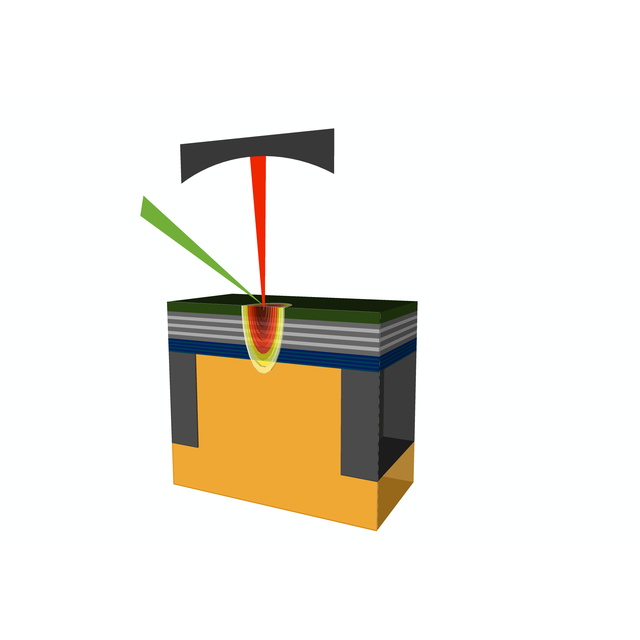
Les technologies de l’information et de la communication ont révolutionné notre monde et ont remodelé nos industries. Les futurs défis de ce secteur comprennent le traitement massif de données, le calcul haute performance et la sécurité du monde numérique. Tous ces défis dépendent de façon critique des références de fréquence et de temps. Des horloges précises sont ainsi nécessaires pour l'authentification des transactions financières, pour la gestion des réseaux de communication, ainsi que pour le rétablissement rapide des signaux GPS en situation dense et la synchronisation des systèmes RADAR.
D’autre part, dans les systèmes de communication optique actuels, la transmission des signaux optiques utilise les longueurs d'onde de la lumière, la phase et l’amplitude ce qui permet d’atteindre un débit de transmission de plusieurs centaines de Gbit/s à environ 1Tbit/s sur une seule porteuse de longueur d'onde.
C’est dans le contexte des technologies de l’information et de la communication que la thèse s’est focalisée sur les développements technologiques pour améliorer la gestion thermique des lasers à émission verticale en cavité externe (VeCSEL), épitaxiés sur substrat GaAs. La thèse s’est effectuée au sein de la salle blanche du C2N sur des VECSELs épitaxiés par EPVOM. Les mesures optiques ont été réalisées chez Thales Research and Technology (TRT) pour les structures émettant à 980nm, et au Laboratoire Charles Fabry (LCF) pour celles émettant autour de 852nm. Les développements technologiques réalisés à la fois en gravure profonde des structures semiconductrices et en remplissage par du Cu électrolytique en face arrière (en étroite collaboration avec un ingénieur du laboratoire Albert Fert), nous ont permis de proposer une nouvelle architecture de refroidissement des structures VECSEL permettant une augmentation notable de la puissance de sortie.
(en anglais) Hybrid silicon photonics based on magneto-optical materials
C2N - Centre de Nanosciences et de Nanotechnologies, Amphithéâtre, Palaiseau
Soutenance de thèse
Jury members:
Mme Giovanna CALÒ - Rapportrice
M. Xavier LETARTRE - Rapporteur
M. Olivier GAUTHIER-LAFAYE - Examinateur
M. François ROYER - Examinateur
Mme Nathalie BARDOU – Examinatrice
Directeurs de thèse :
Mme Béatrice DAGENS
M. Laurent VIVIEN
Nonreciprocal optical devices, such as isolators and circulators, are essential for controlling light propagation in photonic systems. They prevent feedback-induced instabilities in lasers and enable signal routing for feedback-based processing. As photonic integrated circuits advance, the integration of nonreciprocal devices must keep pace. While magneto-optical isolators excel in compactness, insertion loss, isolation ratio, and spectral bandwidth, their performance in TE polarization remains limited.
Inspired by magnetobiplasmonic approaches, this work proposes a transverse magneto-optical Kerr effect (TMOKE) coupled-waveguide system. This architecture leverages modal beating and evanescent coupling in silicon waveguides, combined with the magneto-optical (MO) effect, to achieve nonreciprocal operation. Like conventional evanescent couplers, the TMOKE-coupled-waveguide system performs beam division and recombination. With proper tuning, it functions as a 3-dB beam splitter, with outputs that are either in-phase or out-of-phase depending on the propagation direction. Simulations on a silicon platform with a MO garnet demonstrate 30-dB isolation over a 35nm bandwidth and a compact 500µm footprint.
(en anglais) Self-pulsing synchronization and optomechanical spiking with integrated nanocavities for analog computing
C2N - Centre de Nanosciences et de Nanotechnologies, Amphithéâtre, Palaiseau
Soutenance de thèse
This thesis explores two topics at the intersection of nanophotonics, nonlinear dynamics, and neuromorphic engineering using integrated photonic and optomechanical crystal cavities.
In the first part, we investigate the synchronization of two self-pulsing photonic crystal nanocavities. Starting from the design, fabrication, and full characterization of a single self-pulsing cavity, we then study both unidirectional and bidirectional synchronization regimes. Rich dynamical phenomena are revealed, including multi-frequency locking, phase slips, and asynchronous states, all backed by detailed experiments and simulations.
In the second part, we turn to the spiking (all-or-none) dynamics of an electro-optomechanical crystal cavity. By combining optical and electrical control of the mechanical resonance, we achieve the spiking behavior, the manipulation of the spiking threshold, temporal summation, and refractory period—key ingredients of biological neuron-like behavior. Experimental results are in good agreement with our theoretical and numerical predictions.

(en anglais) Mid-infrared SiGe photonics: electro-optical frequency-combs and supercontinuum generation
C2N - Centre de Nanosciences et de Nanotechnologies, Amphithéâtre,
Soutenance de thèse
Jury Members
Loïc Bodiou (Université de Rennes)
Victor Torres-Company (Chalmers University of Technology)
Giuseppe Leo (Université Paris-Cité)
Goran Mashanovich (Southampton University)
The on-chip integration of mid-infrared spectroscopy systems provides a way to make them more accessible. In this context, silicon (Si) photonics is an attractive means to achieve this, thanks to the high throughput manufacturing capabilities it offers. To overcome the limitations of the materials used in standard Si photonics, due to the absorption of silica (SiO2) beyond 3.5 µm and Si beyond 7 µm wavelength, the germanium (Ge)-rich graded silicon-germanium (SiGe) platform platform represents a potential candidate. Not only does it extend the wavelength range accessible by Si photonics, but it also allows to keep the compatibility with high-volume CMOS manufacturing processes. The objective of this thesis work is to generate broadband light from existing mid-infrared light sources, necessary for the realization of such an integrated spectroscopic system.
Figure : Demonstration of a wideband mid-infrared source through supercontinuum generation, covering up to 2 octaves in the mid-infrared, while using low pump powers compared to the state of the art.

(en anglais) Strain engineering in freestanding ferroelectric membranes
C2N - Centre de Nanosciences et de Nanotechnologies, Amphithéâtre, Palaiseau
Soutenance de thèse
Jury Members
Mme Céline LICHTENSTIGER UNIVERSITÉ DE GENÈVE, Rapporteure
M. Guillaume NATAF Université de Tours Rapporteur
M. Jean François DAYEN Université de Strasbourg Examinateur
M. Pavlo ZUBKO University College London Examinateur
M. Stéphane FUSIL Laboratoire Albert Fert - CNRS Invité
This thesis investigates the fabrication and controllable manipulation of freestanding ferroelectric oxide membranes, with a particular focus on strain and flexoelectricity as levers for tuning polarization. In contrast to conventional substrate-clamped thin films, released membranes possess enhanced mechanical freedom, providing a direct platform to probe how strain gradients influence ferroelectric behavior.
Using a sacrificial-layer release method, we fabricated freestanding membranes of archetypal ferroelectrics such as PbZrTiO₃ (PZT) and BaTiO₃ (BTO). We first explored their response under passive, uncontrolled bending conditions. These deformations induced polarization reorientation within the membranes, revealing bending as a functional route for engineering ferroelectric polarization.
To achieve deterministic control, we then developed an on-demand method to shape the membrane and prescribe strain with precision. This approach employs photoactive azobenzene polymers (PAZO), where UV illumination generates periodic surface relief patterns that mechanically deform the membrane. A spatial light modulator sculpts the illumination profile, and thus the strain field, with high fidelity. Through this light-written strain, we realize 90° polarization rotations in PZT via piezoelectric coupling and full 180° reversals in BTO driven by flexoelectricity, all in a periodic and programmable manner
Together, these results illuminate the intertwined roles of strain and flexoelectricity in ferroelectric materials and establish a versatile platform for probing and harnessing these effects with unprecedented control.
Figure : Photosensitive polymer platform for advanced ferroelectric strain engineering
Contribution aux réseaux de communications quantiques avec des photons intriqués en fréquence par des résonateurs en Silicium
C2N - Centre de Nanosciences et de Nanotechnologies, Amphithéâtre, Palaiseau
Soutenance de thèse
Composition du jury / Jury members:
M. Olivier ALIBART, Université Côte d'Azur, Institut de Physique de Nice (INPHYNI) - Rapporteur
M. Daniele BAJONI, Photonics Group Unipv - Rapporteur
M. Christophe COUTEAU, Université de Technologie de Troyes (UTT), Laboratoire Lumière, nanomatériaux & nanotechnologies (L2n) - Examinateur
Mme Maria AMANTI, Université Paris Cité, Laboratoire Matériaux et Phénomènes Quantiques (MPQ) - Examinatrice
M. Kamel BENCHEIKH, Université Paris-Saclay, Centre de Nanosciences et de
Nanotechnologies (C2N) Examinateur
Mme Sylvie LEBRUN, Université Paris-Saclay, Institut d'Optique Graduate School (IOGS) - Examinatrice
Les réseaux quantiques améliorent les systèmes de communication quantique et établissent des connexions entre plusieurs noeuds grâce à la distribution de ressources quantiques, par exemple des états intriqués. Les photons constituent d’excellents porteurs d’information quantique, car ils peuvent transporter ces ressources quantiques à travers des fibres optiques, où les fluctuations environnementales et les pertes optiques sont réduites. L'exploitation d'états quantiques de haute dimension, appelés qudits, permet un transfert d'informations plus dense et une meilleure résistance au bruit que l’utilisation des qubits, leurs équivalents binaires. L'information quantique peut être encodée dans plusieurs degrés de liberté du photon. L’encodage en fréquence est robuste face aux fluctuations de polarisation et compatible avec l'infrastructure fibrée existante, tout en permettant l'accès à un espace de Hilbert de haute dimension. Les qudits encodés en fréquence sont manipulés à l'aide de dispositifs fibrés commerciaux, tels que les modulateurs électro-optiques, ce qui permet en outre la parallélisation des opérations.
Dans cette thèse de doctorat, nous utilisons des états de Bell encodés en fréquence de dimension d=2 (qubits) et d=3 (qutrits) pour réaliser une preuve de concept d'un réseau de distribution quantique de clé basé sur l'intrication. Nous utilisons un résonateur spiralé en silicium comme source paramétrique de paires de photons via un mélange à quatre ondes. Nous démontrons un peigne de fréquences et l’accès à 80 modes de fréquentiels. Nous sélectionnons 21 liaisons quantiques capables de transférer des qubits ou des qutrits encodés en 'bins' de fréquence à l'aide d'un seul dispositif expérimental. Nous évaluons et optimisons la source - via la puissance de pompage -, le traitement du signal - via la taille de la fenêtre de coïncidence - et la dimension des qu-d-its jusqu'à d=5 afin de maximiser les performances du réseau quantique de distribution de clés. Nous proposons ainsi une stratégie adaptative pour augmenter le débit d'informations sécurisées transmises en tirant parti de la capacité de codage dense des états quantiques de haute dimension et en bénéficiant du rapport signal sur bruit plus élevé des qubits. Nous montrons qu’on peut ainsi communiquer jusqu'à une distance simulée de 295 km.
(en anglais) Coherent acoustic phonons in nanostructures: transduction, transport, and tunability
C2N - Centre de Nanosciences et de Nanotechnologies, , Palaiseau
Soutenance de thèse
Coherent acoustic phonons are collective lattice vibrations with a well-defined phase. Their ability to couple with various excitations makes them attractive for interfacing different solid-state platforms, while their slow propagation speed enables signal processing and information storage in compact devices. In this thesis, we develop three nanophononic devices that address coherent phonon generation and detection, propagation control, and tunability. We introduce elliptical micropillar optophononic resonators that lift the degeneracy of optical cavity modes in energy and polarization. By combining this property with a cross-polarization-scheme pump-probe experiment, the generation and detection of coherent acoustic phonons are simultaneously enhanced. We design a phononic waveguide and demonstrate a quasi-continuous source of acoustic phonons at 20 GHz. We observe phonon propagation over 20 μm and demonstrate spatio-temporal coherent control of guided phonons. And finally, we design acoustic resonators incorporating mesoporous thin films and use their stimuli-responsive properties to achieve tunability of acoustic resonances through external environmental control. These three nanophononic devices serve as basic building blocks for phononic networks and advance the control of coherent acoustic phonons for classical and quantum applications.
(en anglais) Wigner functions of Quantum Light emitted by Quantum Dot Sources
C2N - Centre de Nanosciences et de Nanotechnologies, Amphithéâtre,
Soutenance de thèse
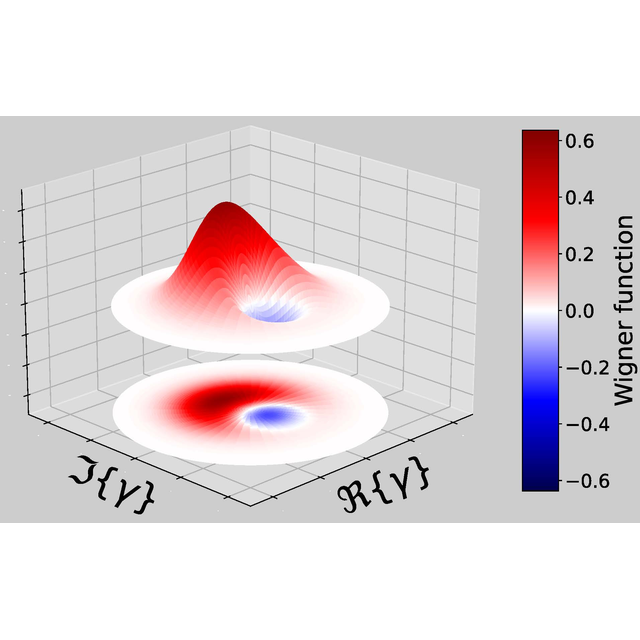
Semiconductor quantum dots have emerged as excellent single-photon sources for optical quantum technologies. When inserted in an optical cavity, they have been shown to deterministically emit pure, indistinguishable single photons on demand with high emission rates. Quantum dot single-photon sources have so far been used to process the quantum information that is encoded in the discrete modes of the single photons; a framework known as discrete-variable encoding. Alternatively, the quantum information can be encoded on the continuous quadratures of the optical field in the continuous-variable framework. With their ability to generate deterministically complex non-Gaussian states of light and to provide optical non-linearity at the single-photon level, quantum dots in cavities could also bring new opportunities to process the information in continuous-variable approach.
In this Ph.D. thesis, we take the first step toward positioning our quantum dot sources as potential resources for continuous-variable optical quantum technologies. We report on the first Wigner function measurement of the single-photon state and photon-number superposition states generated by an optical solid-state quantum emitter. We achieved this goal by overcoming key challenges in operating in the low-transmission regime and in adjusting measurement techniques to the high rate of our single-photon sources: (i) the optimization of the quantum interference between the local oscillator (a weak coherent state) and the photonic states emitted by our quantum dot device, which leads to optimal displacement operations, (ii) the correction of photon loss, and (iii) the reconstruction of photon-number distribution from single-photon detection.

(en anglais) Shaping tungsten dichalcogenides properties by chemical vapor deposition of alloys and polytypes
C2N - Centre de Nanosciences et de Nanotechnologies, , Palaiseau
Soutenance de thèse
Two-dimensional (2D) transition metal dichalcogenides (TMDs) present varied optical and electronic properties associated with their different crystal structures. We optimize here the chemical vapor deposition (CVD) of tungsten-based TMDs, such as hexagonal (1H) WSe2 and WS2 monolayers, as well as monoclinic (1T’) WTe2. While 1H WSe2 and WS2 are typically direct band-gap semiconductors in the monolayer form, the anisotropic 1T' WTe2 is a small band gap topological insulator. Our purpose is to study the structural and electronic phase transition of ternary alloy WSe2xTe2(1-x) between the 1H and 1T' crystal structures. However, the synthesis of the mid-composition (x~0.5) alloys by CVD remains challenging. By just adding an additional monolayer, we obtain bilayer (2ML) structures, in which the available polytypes combinations, and the relative physical properties, are even richer. We further optimize our CVD growth methods to maximize the yield of 2ML hexagonal WSe2 and WS2. In addition to Raman and photoluminescence spectroscopies, we employ various other experimental techniques, including second harmonic generation and selective area electron diffraction, to discern between the 2ML polytypes. We then focus on the 3R bilayer stacking of WSe2 and we resolve its electronic band structure by angle-resolved photoemission spectroscopy.