Ajouter à son agenda
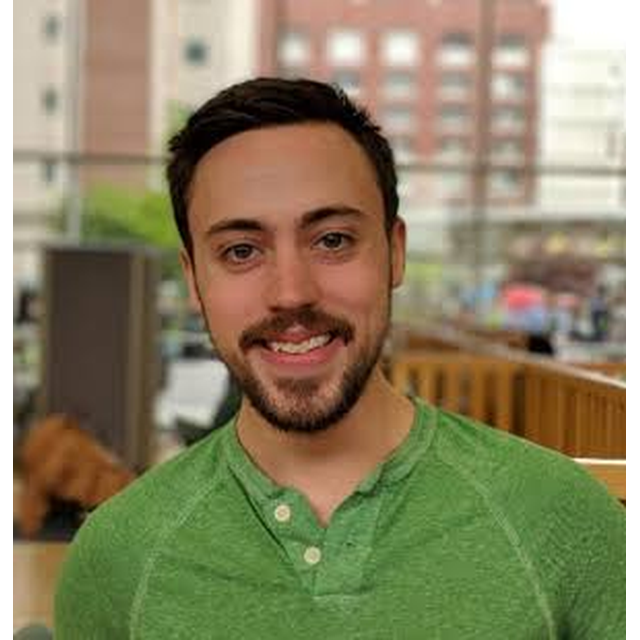
 Matthew Yankowitz
Séminaires
Matthew Yankowitz is an Associate Professor of Physics and Materials Science & Engineering at the University of Washington. His research in experimental condensed matter physics focuses on the investigation and control of strong correlations, magnetism, superconductivity, and topology in two-dimensional van der Waals heterostructures, probed using a combination of electrical transport and scanning tunneling microscopy. Prior to joining the University of Washington, he was a postdoctoral researcher at Columbia University and received his Ph.D. in Physics from the University of Arizona. He is the recipient of an Army Research Office (ARO) Young Investigator Award (2020), an NSF CAREER Award (2021), the Lee Osheroff Richardson Science Prize from Oxford Instruments (2021), the IUPAP Young Scientist Prize in Low Temperature Physics (2022), and an ARO Early Career Program Award (2024). In 2026 he was named a Moore Foundation Experimental Physics Investigator.
Flickering and failed superconductivity in rhombohedral graphene
When a superconductor is cooled below its critical temperature, its resistance ordinarily falls to zero and stays there. I will present transport experiments on ultra-clean rhombohedral graphene that break this expectation in two ways. In parts of its gate-tuned superconducting phase diagram, we find that the resistance ‘flickers’ randomly in time between zero and its full normal-state value, with large regions of the sample switching together and remaining in each state for minutes at a time. The switching reflects a competition between two nearly degenerate electronic states, only one of which is superconducting. In another region of gate space, superconductivity instead appears to ‘fail’: the usual hallmarks of its onset are present, but the resistance saturates at a finite value, the signature of the long-debated anomalous metal. This state sits directly beside a zero-resistance superconductor in the same device, allowing the two regimes to be compared by gate tuning alone. I will discuss what these two behaviors reveal about superconductivity in a system with competing magnetic phases.
Amphithéâtre
c2n
Centre de nanosciences et de nanotechnologies
10 boulevard Thomas Gobert
91120 Palaiseau